
Optical quality inspection
Optical sorting is an additional quality-control step that Interwolf carries out when needed and as agreed with the customer – so it is not a standard step that every screw goes through, but a service we add when the batch, the customer's specification or the nature of the project requires it.
How it works
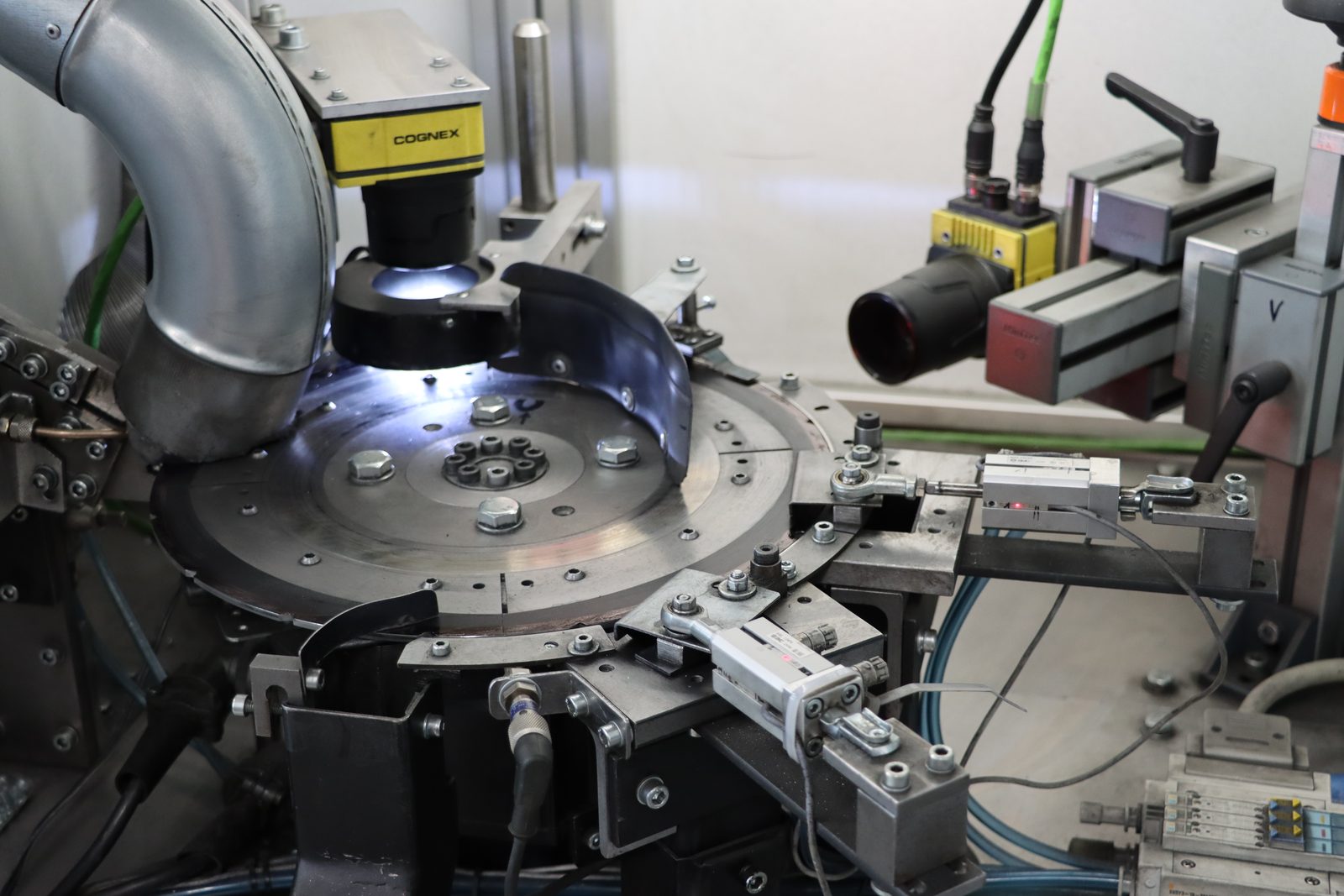
We have three optical machines for optical sorting, and each batch runs through one of them, selected according to the size and geometry of the screw. The machine is equipped with high-resolution cameras and a lighting system adapted to the head, thread and shank of the screw, and detects deviations on several levels at once:
- dimensional deviations (length, diameter, head roundness, thread depth and profile),
- visual defects (scratches, nicks, head deformation, incomplete thread, material residue after forming or rolling),
- deviations in surface treatment or coating, where relevant.
The system automatically rejects non-conforming parts from the flow before they reach packaging, preventing a faulty part from ending up in a batch shipped to the customer.
Quality target and scope of inspection
The target quality level for optical sorting is up to 50 ppm (parts per million) – i.e. fewer than 50 non-conforming parts per million inspected. Depending on the agreement with the customer, we can carry out 100% inspection of the whole batch or inspection according to an agreed sampling plan, where this meets the project requirements.
When we use it
At Interwolf, optical inspection is carried out on request – usually when:
- the customer's specification explicitly requires documented 100% inspection,
- the screws are intended for automated assembly lines, where a single non-conforming part could cause a stoppage,
- the project requires additional traceability and proof of quality (e.g. in the automotive industry or for electronic devices).
The service is also available as a stand-alone service for external customers – including screws or parts that were not produced by us – when they need independent optical inspection before further use or distribution.
Why it matters to the customer
Optical sorting reduces the risk of stoppages on the customer's own assembly line, as non-conforming parts are detected and removed at our facility rather than at the customer's. This means fewer complaints, less scrap on the customer's side and greater reliability of the delivered batch, whenever this is agreed.